Angel Number 111 Meaning: Attention, Beginnings, and Choice
Treat 111 as an optional prompt to notice what you are beginning and choose one grounded first step.
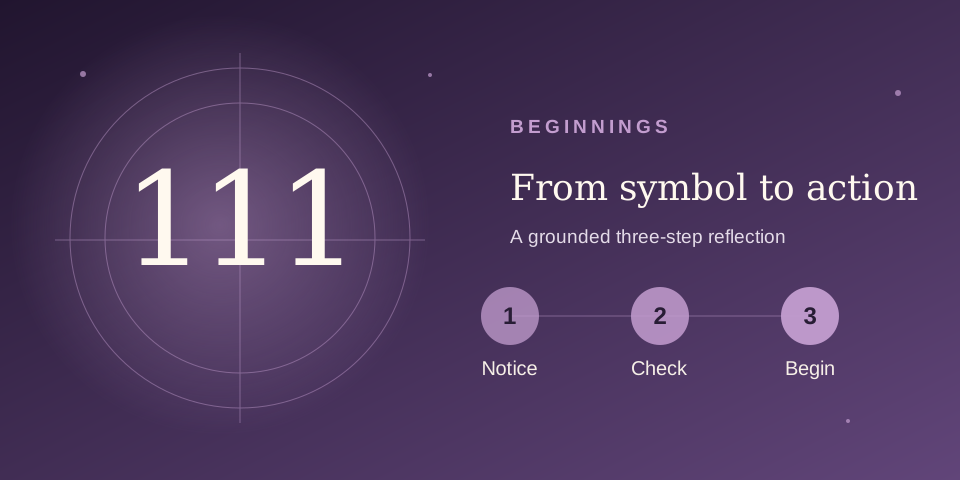
What does 111 mean?
In popular angel-number writing, 111 often points to beginnings. Use that idea to notice a choice you can make, then test one small step.
111 in love and relationships
If a relationship is on your mind, name what you want to say or ask. A direct, respectful conversation gives you more information than a repeated number. Do not read 111 as proof of someone else's feelings or a guaranteed new relationship.
111 in work and money
For work or money, treat a new idea as something to investigate. Check time, cost, skills, and alternatives before committing. A useful first step could be a short course outline, a draft proposal, or one conversation with someone in the field.
What to do when you notice 111
- Name the beginning
- Check one practical fact
- Try a small step
Use the sequence as an optional reflection prompt. Make important decisions from evidence and qualified advice.
Does seeing 111 mean a new opportunity is guaranteed?
No. It can serve as a prompt to examine an opportunity, but the number cannot establish that one exists or predict the result.
A common symbolic reading of 111
Some modern angel-number guides connect 111 with beginnings, focused attention, or the thoughts you are carrying into a new phase. Other traditions may read it differently, and no shared authority fixes its meaning. You can use the theme as a question rather than a verdict: what is asking for attention, and what beginning is actually available to you? The number itself does not create an opportunity or promise that an idea will succeed.
Apply the idea to an ordinary decision
Suppose you keep noticing 111 while thinking about a class you might take. Instead of treating it as proof that you must enroll, check the cost, schedule, prerequisites, and reason for your interest. A low-risk first step might be reading the syllabus or asking about one session. If the practical details do not work, that information matters more than the coincidence. A beginning can be exploratory rather than irreversible.
Separate attention from assumption
After a sequence catches your eye, you may notice it more often simply because it has become familiar. Write down when you saw it, what you were doing, and what you had already decided. Add ordinary explanations such as checking the time frequently or seeing the same route number. This record helps you distinguish the event from the meaning you attach to it and leaves room to change your mind.
Choose one small next step
Ask: what do I want to begin, what would make a first step sensible, and what evidence would help me decide whether to continue? For a new creative project, that might mean drafting one page or setting aside twenty minutes. Do not use 111 to infer another person’s feelings, make a rushed purchase, or treat a health, legal, or financial decision as settled. Symbolism may prompt reflection; it cannot verify a prediction.